

When engineers step into the world of VLSI design and semiconductor engineering, one of the most sought-after areas is Analog ASIC jobs. These roles are highly specialized, requiring both creativity and technical depth. As an industry expert, let me walk you through what these roles mean, how they contribute to the semiconductor ecosystem, and why they are crucial for future technology.
This session is designed for engineering undergraduates, Master’s students, Ph.D. candidates, job seekers, working professionals, and faculty members who wish to understand the scope of analog VLSI careers.
In modern electronics, analog circuits play a key role in bridging the physical world with digital systems. Every sensor, amplifier, or interface circuit relies on analog design. When combined with ASIC (Application-Specific Integrated Circuit) development, these jobs open pathways into industries like consumer electronics, automotive, IoT, and 5G infrastructure.

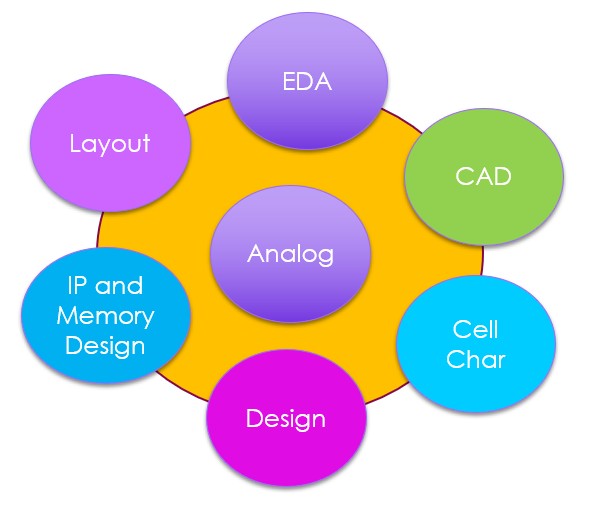
Engineers design transistor-level analog circuits like amplifiers, oscillators, and converters. They also simulate performance across different process corners to ensure robustness.
Specialists characterize standard and custom cells for timing, power, and functionality. This ensures accurate modeling for digital and analog integration.
Focuses on SRAM, DRAM, and non-volatile memories. Engineers ensure memory cells meet speed, power, and retention requirements.
Involves developing reusable analog IP blocks such as PLLs, ADCs, and SERDES. Characterization guarantees reliability across process variations.
Engineers build run sets for simulation and verification tools. This ensures consistency in flow automation across multiple projects.
CAD engineers create and optimize design flows using EDA tools. They streamline the design process for analog and digital teams.
Layout engineers translate schematic designs into physical layouts, focusing on matching, symmetry, and parasitic control for high precision.


To Upskill yourself , you can access the whole Session for Free by clicking the link below
https://academy.semionics.com/courses/Defining-Analog-ASIC-VLSI-Jobs-658e6047e4b0d4e41c3a2a2c
At Semionics, we provide hands-on training, industry exposure, and mentorship for engineers aspiring to enter analog VLSI jobs. Our programs cover design, layout, EDA methodologies, and verification.
Analog ASIC VLSI roles are challenging yet rewarding. By mastering circuit design, characterization, layout, and CAD methodologies, engineers can contribute to cutting-edge technologies. These profiles ensure that the next generation of electronics is faster, smarter, and more reliable.
If you are passionate about semiconductor careers, now is the right time to explore and specialize in analog design.
The images and content used in this blog are generated, created, or referenced from Google Images and other educational sources. They are intended purely for educational and guidance purposes, with no intention of monetization. All credits belong to the respective owners. Semionics holds no responsibility for third-party content and encourages readers to verify before use.

Semionics, Your Partner in semiconductor space , connecting industry needs with skilled professionals in Analog & Mixed-Signal IC Layout Design and Physical Verification ."from Basics to Brilliance .. A path to Semiconductor Industry!!"