

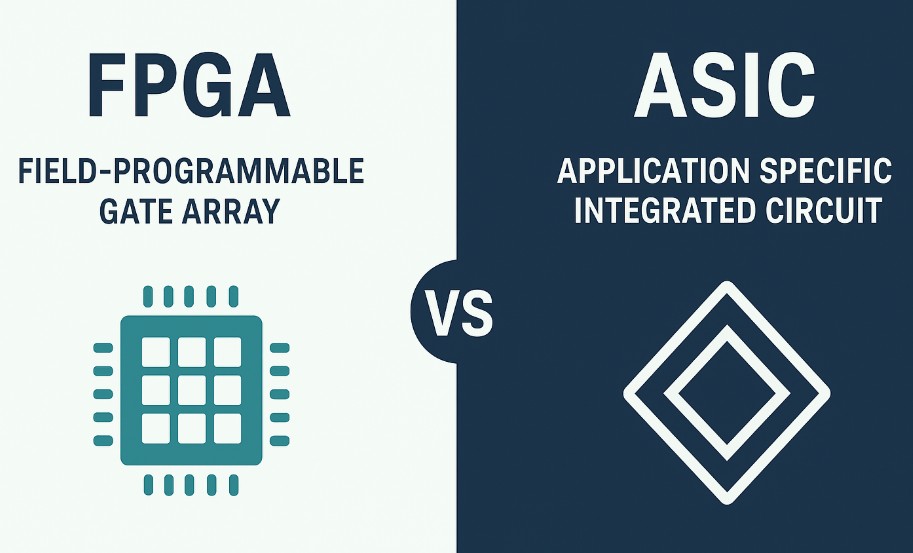
The semiconductor industry in 2025 is evolving at lightning speed, with ASICs (Application-Specific Integrated Circuits) and FPGAs (Field-Programmable Gate Arrays) driving innovations in AI, 5G, data centers, automotive electronics, and IoT. For students, fresh graduates, and working professionals looking to upskill in VLSI and chip design, one common question arises:
👉 “Should I learn ASIC design or FPGA design?”
The answer lies in understanding how each technology works, where they are used, and which skill set aligns with your career goals in semiconductor engineering.
ASICs are custom-built integrated circuits designed for a specific application. Once fabricated, their functionality cannot be changed. They are ideal for high-performance, high-volume products where speed, power efficiency, and small form factor matter most.
📌 Applications of ASICs in 2025:
📌 Skills Required for ASIC Engineers:
ASIC design has a steeper learning curve, but demand is massive—especially in product-based semiconductor companies like Intel, Qualcomm, AMD, and Nvidia that hire for front-end and back-end ASIC roles.
FPGAs are reprogrammable chips that allow real-time hardware reconfiguration. They are widely used in prototyping, aerospace, defense, and industrial applications, and in recent years have gained traction in AI inference, 5G infrastructure, and edge computing.
📌 Applications of FPGAs in 2025:
📌 Skills Required for FPGA Engineers:
FPGAs are ideal for those who want faster prototyping, hands-on experimentation, or startup-focused innovation.
🔹 Choose ASIC if you want to work in core chip design, SoC development, or large semiconductor companies. It offers long-term, high-impact projects and exposure to industry-standard EDA tools like Synopsys Design Compiler, Cadence Genus, and Mentor Calibre.
🔹 Choose FPGA if you prefer flexibility, rapid prototyping, robotics, defense, or niche hardware applications. It’s also beginner-friendly since you can test and debug on real boards.
🔹 Best Option: Learn both! Many engineers start with FPGA design for hands-on experience and later transition to ASIC roles. Hybrid skills make you highly employable in VLSI, embedded systems, and hardware engineering.
Go through the Free Video on semionics-academy

https://academy.semionics.com/courses/FPGA-or-ASIC-665fef488cf8661df86948a6
Both ASIC and FPGA design skills are highly relevant in 2025 semiconductor careers.
✨ Ready to take the next step?
👉 Explore ASIC and FPGA training programs at Semionics—designed for students, fresh graduates, and working professionals to master industry tools, build projects, and crack VLSI interviews.

Semionics, Your Partner in semiconductor space , connecting industry needs with skilled professionals in Analog & Mixed-Signal IC Layout Design and Physical Verification ."from Basics to Brilliance .. A path to Semiconductor Industry!!"